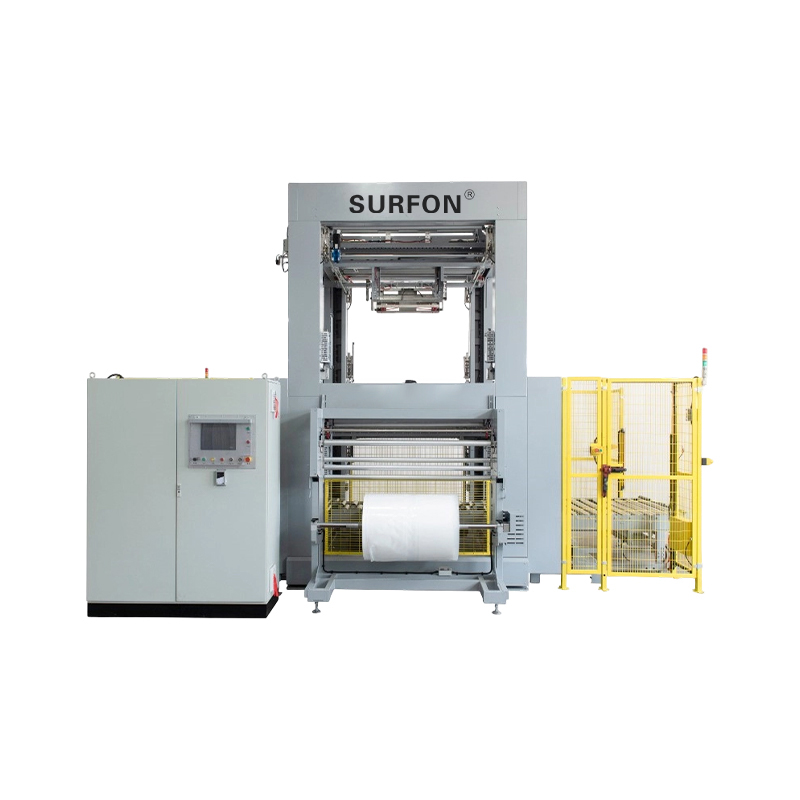
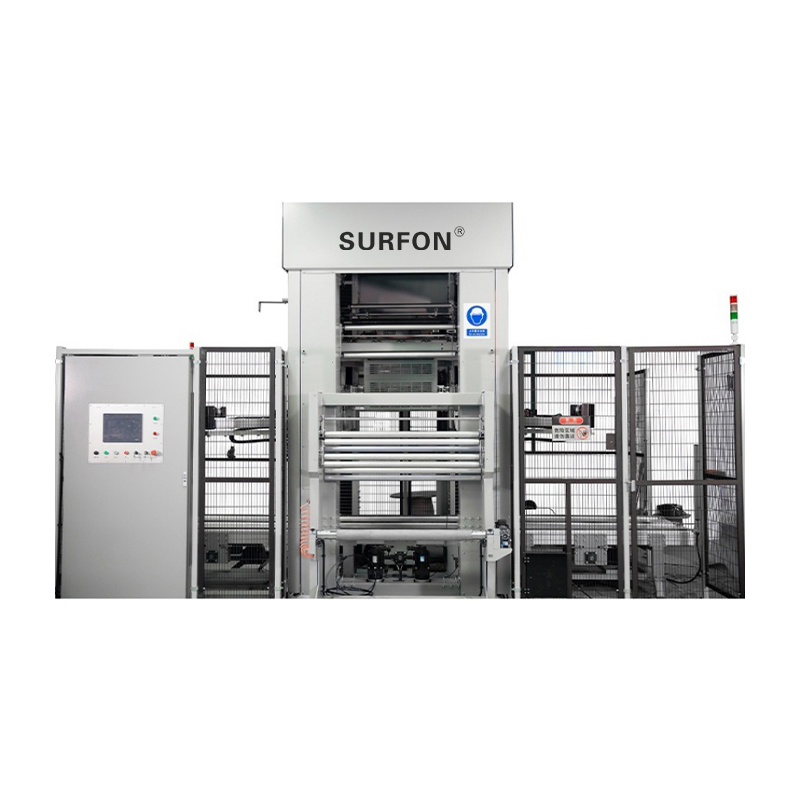
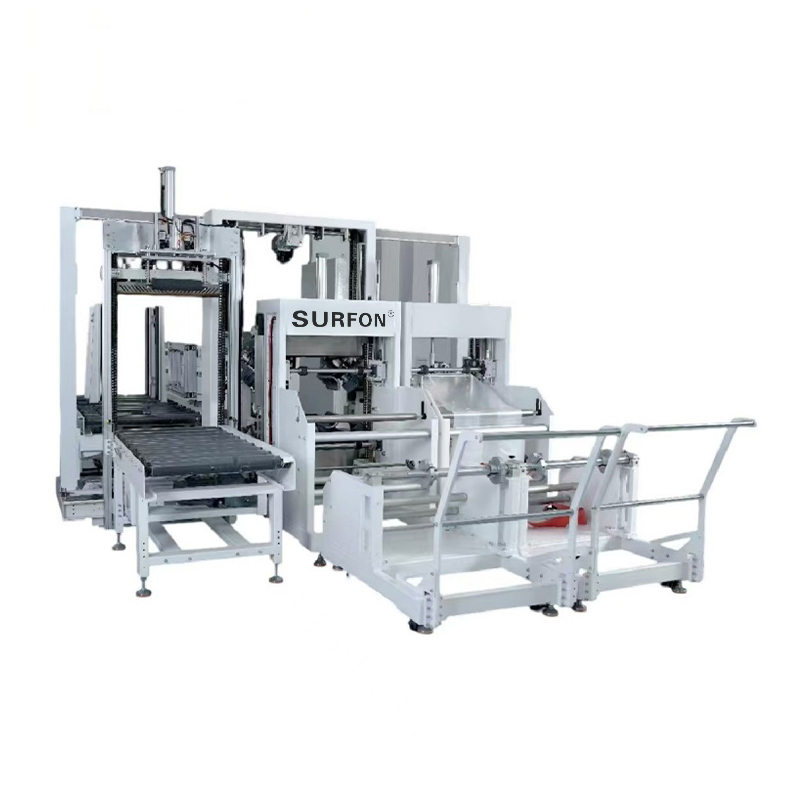
Fully-auto Cold Stretch Hooding Machine from Shanghai KUKO Packing Machinery Co., Ltd. applies a pre-formed elastic polyethylene hood around a palletised load without heat, giving five-sided protection and stable load retention for warehousing and transport. As a Fully-auto Cold Stretch Hooding Machine manufacturer, we engineer the machine around your pallet footprint, load height and line speed, then support it from factory run-off through commissioning and production. This category is part of our Fully-auto Pallet Stretch Wrapping Machine range.
Where cold stretch hooding fits in your production line
Cold stretch hooding is an end-of-line solution for manufacturers who need a clean, tight cover over the top and sides of a palletised load. It is suited to stable pallet patterns that will be stored, transported or handled multiple times before reaching the customer. Because the hood is applied under tension at ambient temperature, it holds the upper layers in place without heat exposure or heat-tunnel energy consumption.
The strongest application fit is where load protection and presentation both matter. The film covers the full pallet top and wraps down over the sides, reducing the risk of product movement, dust ingress and moisture on the upper layers.
- Bagged products, cartons and cases that need top-layer retention
- PET bottles, cans and containers with consistent pallet patterns
- Logistics and e-commerce loads that will be handled multiple times
- Temperature-sensitive goods that should not pass through a shrink tunnel
Our range: Fully-auto Vertical Cold Stretch Hooding Machine
Fully-auto Vertical Cold Stretch Hooding Machine
The vertical model forms a film hood above the load and stretches it downward over the pallet. We configure it for different pallet sizes, load heights and film roll widths. The machine is fully automatic, so pallets are received from the infeed conveyor, centered, hooded and discharged without operator intervention.
View the Fully-auto Vertical Cold Stretch Hooding Machine
If your operation already uses heat-based pallet protection, we also build Pallet Shrink Wrapping Machine systems. The right choice depends on your film supply, energy cost, product sensitivity and required throughput, which we review before proposing a configuration.
Configuration scope
Our proposal is based on a specific working point, not a generic machine specification. The table below shows the main parameters we set for each project and the data we use to define them.
| Configuration point |
What we set on the machine |
Project data we need |
| Film unwind and hood forming |
Hood width, film tension, stretch ratio and roll handling |
Film roll width, gauge, stretch hood film type and load width |
| Pallet and load envelope |
Working height, load clearance and film skirt length |
Pallet footprint, load height, top overhang and required skirt |
| Conveyor interface |
Infeed and outfeed height, load centering and stop positions |
Conveyor height, flow direction, pallet weight and line speed |
| Throughput requirement |
Cycle time, film feed speed and conveyor pacing |
Target pallets per hour, shift pattern and infeed buffer |
| Control and reporting |
PLC cycle, recipe storage and line interlocking |
PLC brand, MES or SCADA protocol, and number of SKUs |
Controls, automation and MES integration
KUKO machines are engineered for continuous operation and line communication. We configure the PLC and HMI around your existing control architecture, including MES data collection when the line requires it. We can store multiple recipes for different load heights and film widths, so operators call up the right profile from the HMI instead of making mechanical adjustments.
The hooder is normally integrated between a palletizer and the dispatch conveyor. In automatic mode, the infeed conveyor stops, the load is centered, the hood is formed and applied, and the outfeed release occurs only when the cycle is complete. For turnkey projects, we supply non-standard conveying lines and connect the hooder to upstream and downstream packaging equipment.
- Standalone operation with automatic cycle start
- Automatic infeed and outfeed conveyor interlock
- MES or SCADA data interface
- Recipe management for multiple load profiles
Installation, utilities and acceptance
We confirm the electrical and pneumatic requirements in the proposal because they depend on frame size and film handling configuration. Most installations use a three-phase electrical supply; some use compressed air for load centering or guard operation. The layout drawing includes the machine envelope, maintenance access and conveyor connection points.
Before delivery, the machine goes through our standardized commissioning process. We run the complete hooding sequence, check the film path and tension, verify safety interlocks and record cycle times. Acceptance criteria are defined at order stage and are included in the technical documentation for the project.
Quality assurance, compliance and service support
KUKO builds the Fully-auto Cold Stretch Hooding Machine in two production bases with a total workshop area of 34,000 square meters. Sheet metal work is produced on German IPG high-precision laser cutting machines and imported servo bending machines, supporting consistent frames and accurate guarding for a machine that runs daily.
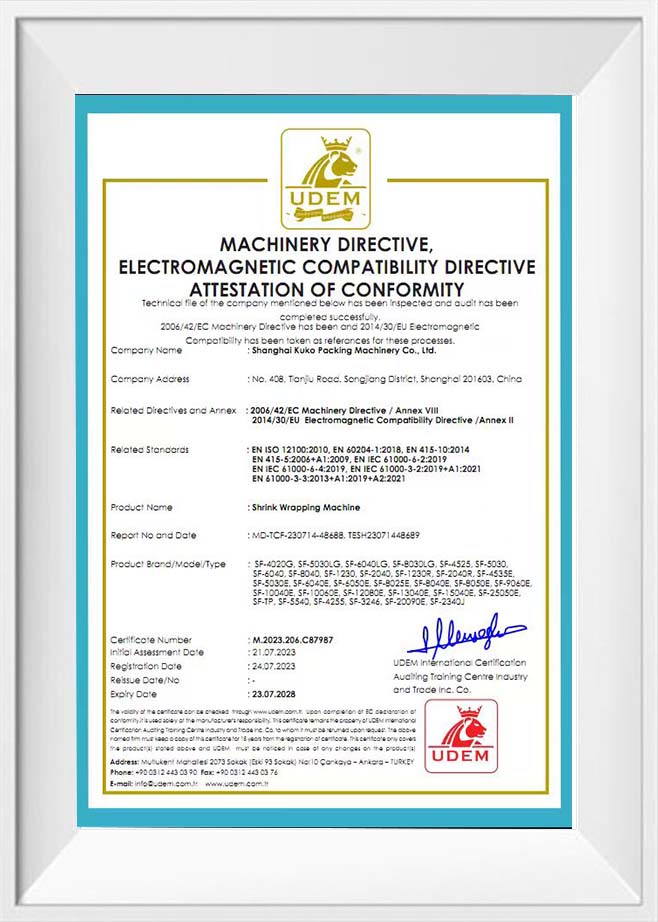
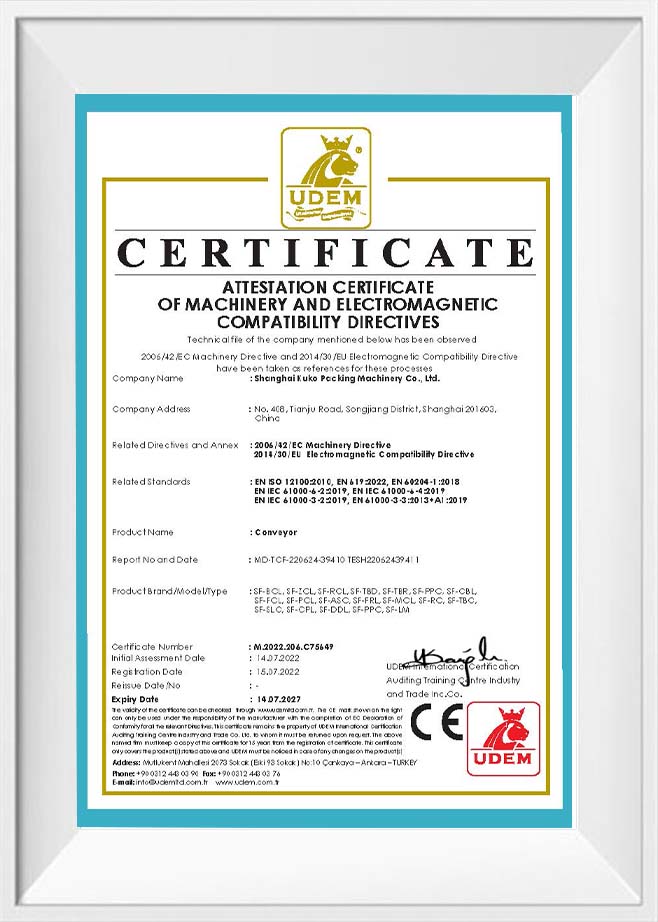
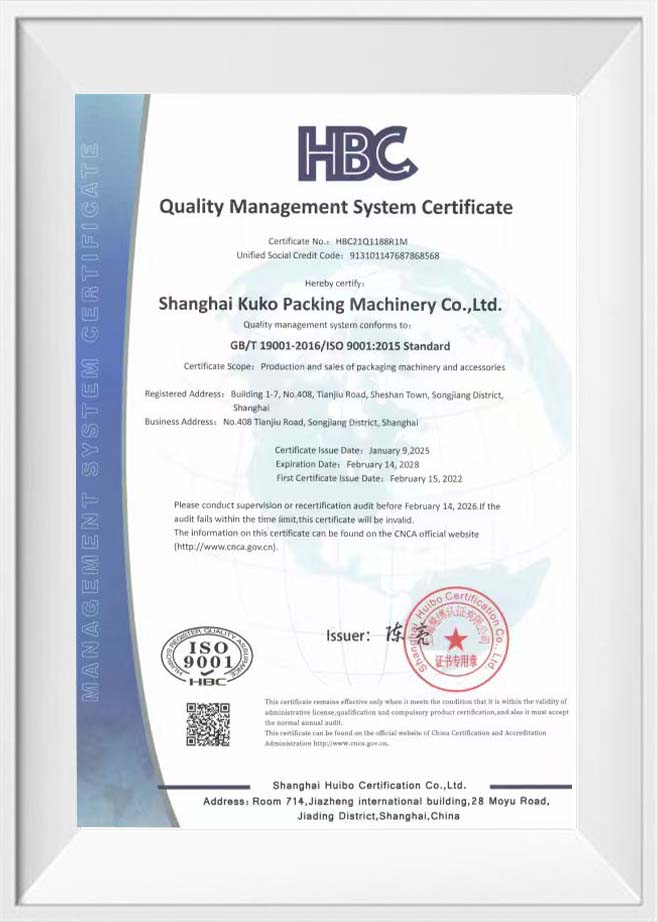
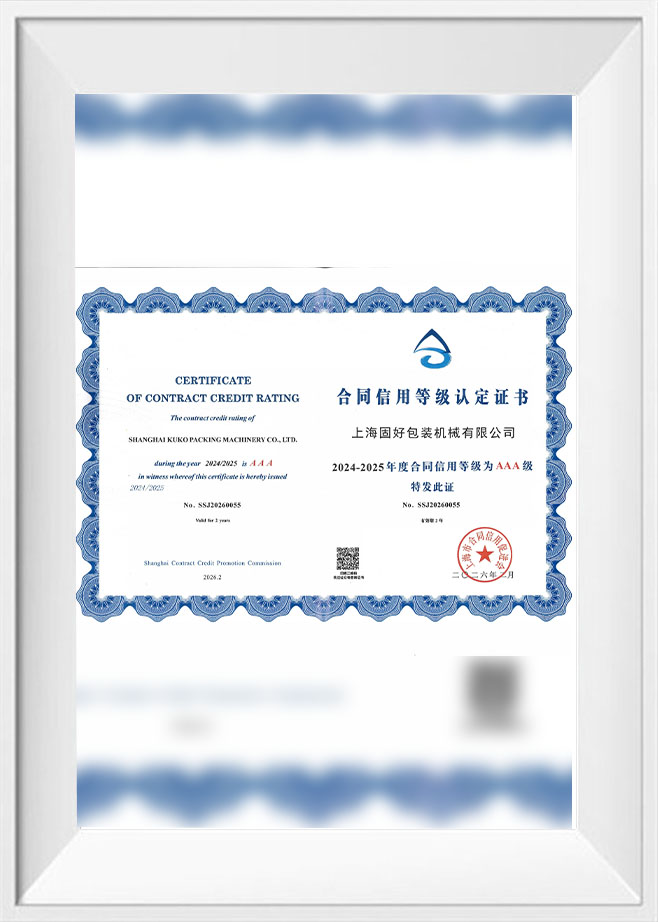
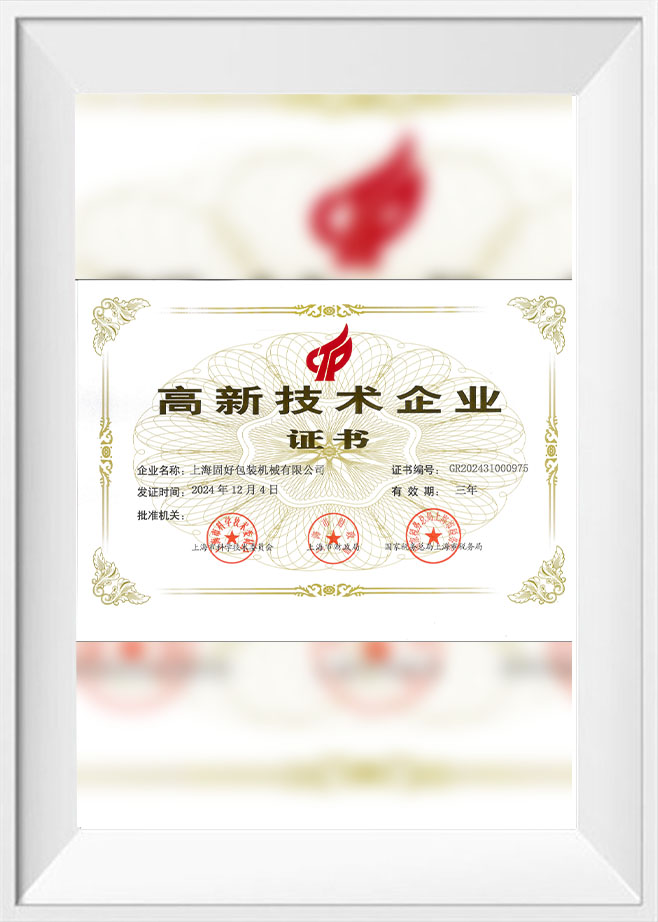
Our quality management system is ISO9001 certified, and export machines carry CE conformity documentation. We are recognized as a Shanghai High-Tech Enterprise and a Specialized and Sophisticated Enterprise, and we hold patents on packaging equipment designs. Every machine is supplied with a one-year free warranty and life-cycle maintenance support, and our project team coordinates installation for integrated lines.
Information We Use to Configure Your Solution
To prepare a configuration and quotation, we use your actual pallet and film data rather than a generic model. Please include as many of the following items as possible:
- Pallet footprint, load height and maximum top overhang
- Product form: bags, cartons, bottles, cans, drums or mixed layers
- Pallet load weight and current stabilization method
- Film roll specification if already qualified: width, gauge and PE grade
- Required throughput in pallets per hour and number of SKUs
- Conveyor height, direction, space envelope and upstream or downstream equipment
- Control protocol: Ethernet/IP, Profinet, Modbus TCP, MES or SCADA
- Electrical supply, voltage, frequency and phase; compressed air availability
- Export, crating and on-site commissioning requirements
Frequently Asked Questions
What is the difference between cold stretch hooding and pallet shrink wrapping?
Cold stretch hooding uses elastic PE film at ambient temperature, so there is no heat tunnel, no gas burner and no warm-up time. The film is stretched over the load and holds the top layers in place, while shrink hooding uses heat to make the film conform. We build both and will recommend the better option based on your product, energy cost and film supply.
Can the machine be integrated with our existing pallet conveyor?
Yes. Our proposal always includes the conveyor interface height, load centering position and interlock sequence. Tell us the direction of pallet flow and the PLC protocol, and we will configure the machine accordingly.
What pallet sizes and load heights can the machine handle?
The working envelope is defined in the project review. Send pallet footprint, load height and film roll dimensions, and we will state the valid range and skirt length in the proposal.
What information is needed for a budget quote?
A quick budget quote can be prepared with pallet size, load height, target throughput and destination country. For a fixed proposal we add film specification, conveyor layout and control interface.
Do you provide a warranty and spare parts support?
All KUKO equipment carries a one-year free warranty and life-cycle maintenance support. Spare parts for film-path and wear components can be supplied through our Shanghai headquarters and included in the delivery scope.



 中文简体
 Español