


 中文简体
 Español

 2026.11.25
How to Use Electrical Shrink Wrap: Film Selection, Hand Wrapping, and Machine Tips
Content
- 1 Tubing or Film? Sorting Out the Two
- 2 Choosing the Right Shrink Film for Electrical Products
- 3 How to Hand-Wrap Electrical Items, Step by Step
- 4 Heating Without Damaging the Product
- 5 Mistakes We See Most Often
- 6 When Hand Wrapping Stops Paying Off
- 7 Matching Film, Speed, and Machine
- 8 Storage, Safety, and a Final Look
Ask two people what "electrical shrink wrap" means and you will often get two different answers. For an electrician, it usually means a short length of heat-shrink tubing slipped over a wire joint before the connector goes on. For a packaging engineer, it means the clear or printed film that wraps a charger, a cable bundle, a switch, or a whole carton of components before it leaves the building. Both materials are heat-activated, both shrink, and both are easy to get wrong in ways that only surface later: a split tube on a vibrating machine, a film that puckers across a display window, a seal that quietly lets go somewhere in transit.
We have spent more than twenty years building shrink packaging equipment, so this guide leans toward the film side of the question. But the tubing basics are here too, because the two get confused constantly and the confusion leads to real mistakes.
Tubing or Film? Sorting Out the Two
The quickest way to avoid trouble is to know which material you are actually holding. Tubing is a thick-walled sleeve that insulates and mechanically protects a connection. Film is a thin sheet that bundles, seals, and presents a product. They are not interchangeable, and packaging film should never be used as electrical insulation.
| Property | Heat-shrink tubing | Shrink wrap film |
|---|---|---|
| Wall thickness | Roughly 0.5 to 3 mm | 12 to 25 µm for POF, 30 to 80 µm for PE |
| Shrink behaviour | 2:1, 3:1, sometimes 4:1 along the diameter | Roughly 40 to 60 percent in both directions |
| Typical heat source | Heat gun at 200 to 350 °C | Heat gun, hot plate, or tunnel at 140 to 180 °C |
| Main job | Insulate, seal, and strain-relieve a joint | Bundle, protect, and present a product |
| Typical failure | Split wall, trapped air, scorched insulation | Puckered surface, weak seal, torn corners |
Choosing the Right Shrink Film for Electrical Products
Electrical goods are unforgiving to wrap. They are often boxed, often angular, frequently sold in retail packaging that has to stay readable, and sometimes sensitive to heat. Three film families cover almost everything we see on a production floor:
- POF (polyolefin) is the default for consumer electronics. It is clear, strong, shrinks in both directions, seals at low temperature, and does not leave the haze that older PVC films did. A 15 to 19 µm gauge handles most small boxes and cable coils.
- PE (polyethylene) is the workhorse for heavier items: power strips in bulk, metal housings, long cable drums, cartons of fittings. It is thicker, softer, and more forgiving of sharp corners, but it needs more heat and gives a softer, less glassy finish.
- PVC and PET are mainly used as sleeve labels rather than overwrap, shrinking tightly around a battery, a bottle, or a cylindrical connector to carry print and tamper evidence.
If the product is going to sit on a retail shelf, choose clarity and gloss. If it is going into a warehouse or onto a pallet, choose toughness. Mixing the two on one line is possible, but the tunnel settings will need to change between runs, and that is where most inconsistencies creep in.
How to Hand-Wrap Electrical Items, Step by Step
For low volumes, samples, or repairs, hand wrapping still makes sense. The sequence below is the one we teach new operators, and it produces a result close to machine quality when it is done patiently.
- Measure the film generously. Allow roughly two-thirds of the product length again in film width so the wrap can close around both ends with an overlap.
- Cut cleanly. Sharp scissors or a fresh blade. A ragged edge will tear along the seam during shrinking, no matter how careful you are afterwards.
- Round off the sharp bits. Fold a cardboard corner protector over exposed metal edges, or add a thin foam strip. Film stretches before it breaks, and a hard edge will always win.
- Wrap with a consistent overlap. Two turns around the item, each overlapping the previous by about a third, keeps the film from thinning out in one spot.
- Seal before you shrink. Fold the open ends over and seal them with a impulse sealer, a hot plate, or a tack weld at the overlap. Shrinking an unsealed wrap simply pulls the film back open.
- Vent the trapped air. A small pinhole in an inconspicuous corner lets air escape so the film collapses onto the surface instead of ballooning.
- Shrink from the centre outward. Work the heat gun steadily toward the edges so the film tightens rather than folds over itself.
Heating Without Damaging the Product
Almost every wrapping defect we are asked about comes from heat, not from the film. A few habits keep the process under control:
- Keep the gun moving. Holding it still for even a few seconds will thin the film locally and can deform a plastic housing underneath.
- Work at 150 to 250 mm from the surface and adjust the distance rather than the setting. Nozzle temperature changes slowly; distance changes immediately.
- Heat the corners last. They gather the most film and the most heat, and they are where burn-through starts.
- Test on a scrap unit first, especially with printed cartons where a slightly too-hot gun will dull the ink.
- Stop as soon as the film goes taut. Additional heat adds nothing except risk.
Mistakes We See Most Often
- Too much film. Operators often add a third turn "for safety". The result is a loose, cloudy wrap with heavy folds at the ends.
- Sealing across an edge. A seal laid over a corner has nothing solid underneath it and will fail in handling.
- Cold tunnel, fast belt. On a machine, running the conveyor quicker than the tunnel can recover gives a wrap that looks fine on the line and loosens overnight.
- Mixing gauges mid-run. A 15 µm and a 25 µm film behave very differently at the same temperature setting.
- Shrinking before sealing. The film tightens, the overlap closes, and there is no way to seal it afterwards.
When Hand Wrapping Stops Paying Off
Hand wrapping is honest work, but it has a ceiling. Once you are wrapping more than a few hundred units a day, the cost shifts from film to labour, and consistency starts to drift between operators. That is usually the moment to look at a sealing and shrink tunnel combination rather than a better heat gun.
For small electronics, chargers, and cable coils, a POF line gives a tight, glass-clear finish at low tunnel temperatures, which matters when the product contains a battery or a display.
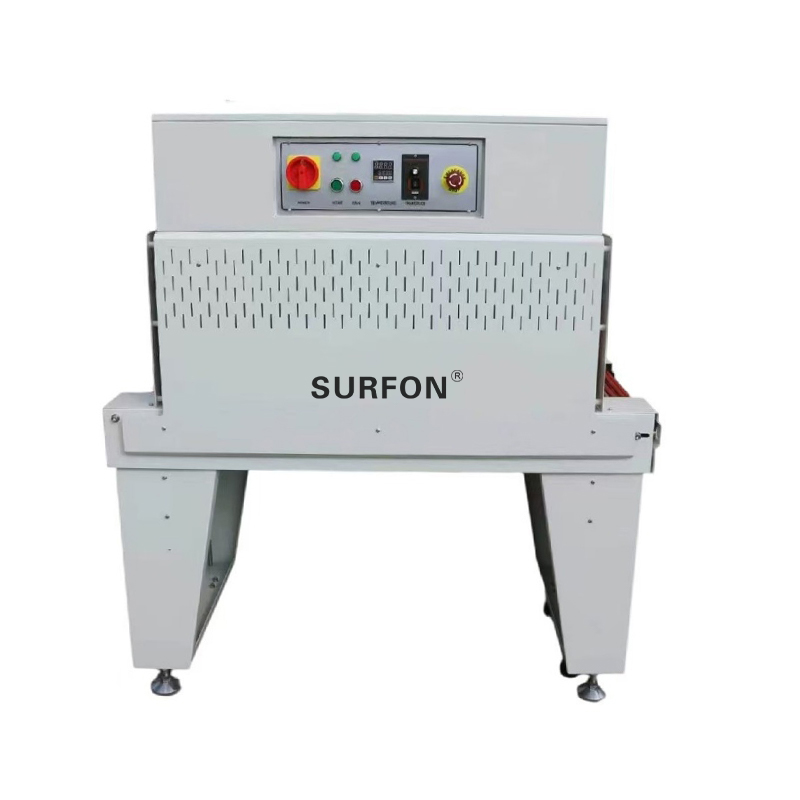 SF-4525 Medium-Sized Heat Shrink TunnelGeneral-purpose tunnel for small to medium regular goods, compatible with POF, PVC, and PET films; a fit between fine POF wrapping and wider PE tunnels.View Product →
For bulkier hardware, power strips, and cartons where puncture resistance counts more than gloss, a PE tunnel with a wider chamber is the more sensible match.
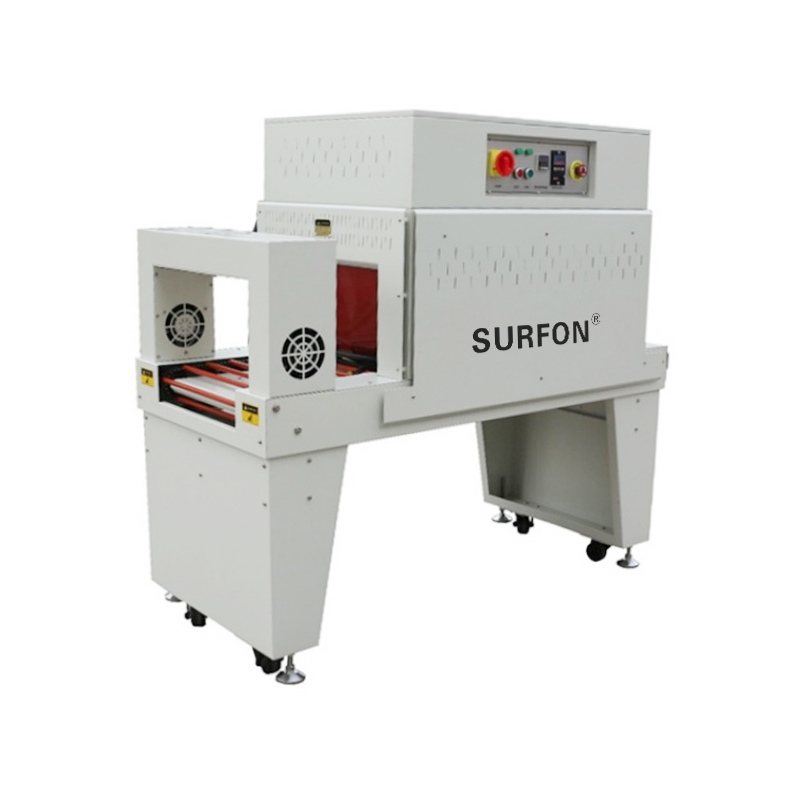 SF-5030E Short-Cavity Dual-Circulation Shrink TunnelA short-cavity tunnel with dual circulating fans for small to medium items and bundles; suits PE-focused lines and varied packaging needs.View Product →
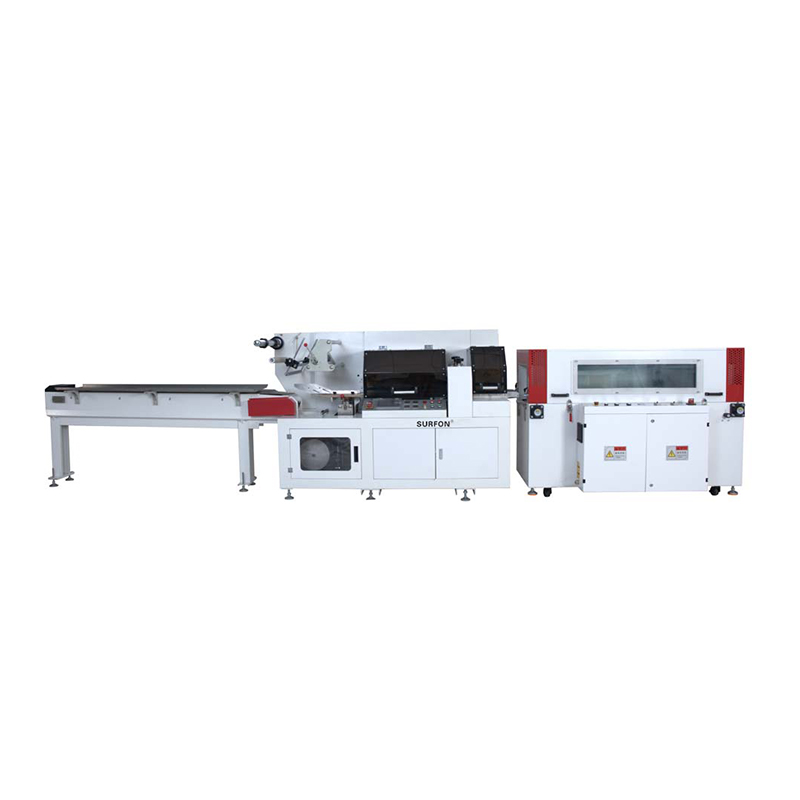
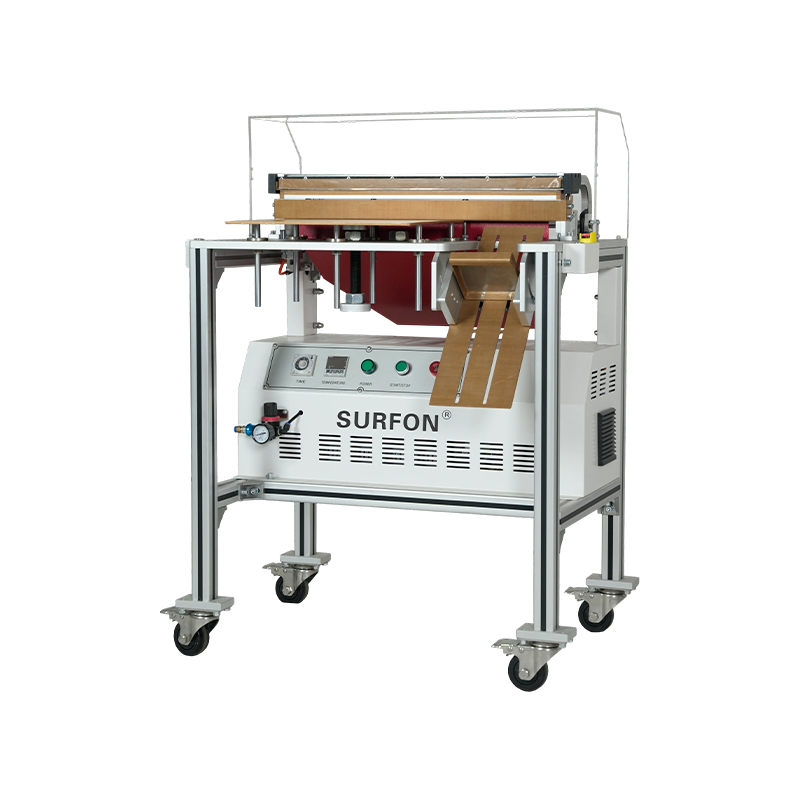
And when the product mix changes constantly — a boxed unit today, a flat pack tomorrow — an L-bar sealer paired with a tunnel handles the variety without constant mechanical adjustment. Our electronics and 3C packaging page shows how these configurations sit together on a real line, and this detailed introduction to heat shrink film packaging machines is worth reading before you specify anything.
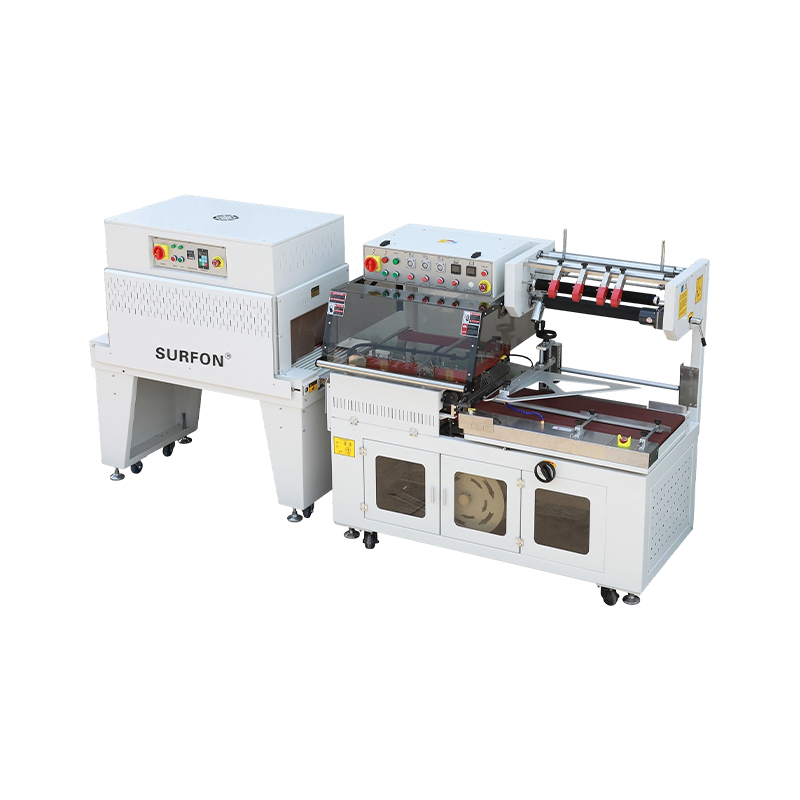 Fully Automatic L-Bar Sealer and Shrink TunnelAn integrated L-bar sealing and shrink tunnel for stable small-box production; useful when mixed product sizes need automated wrapping and consistent sealed edges.View Product →
Matching Film, Speed, and Machine
The machine does not make a good wrap on its own; the film, the tunnel temperature, and the belt speed have to agree with each other. A simple rule of thumb: thicker film needs a longer dwell, a longer dwell needs a longer tunnel or a slower belt, and a slower belt needs more labour waiting at the outfeed. Getting those three into balance is the whole job.
It also helps to think about what the wrap is for. A dust cover for warehouse storage can be soft and slightly loose. A retail pack has to be tight, clear, and free of wrinkles. A pack that travels by courier needs sealed ends that will not peel after an hour of vibration. Each of those answers points to a different film and a different machine setting, and it is far cheaper to decide this before the equipment is ordered than afterwards.
Storage, Safety, and a Final Look
- Store film rolls away from direct sun and heat sources; a warm roll stretches differently and ruins repeatability.
- Keep the heat gun nozzle clear of cables and never leave it resting on a surface while hot.
- Check a finished wrap by pressing the sealed ends. If the seal peels cleanly apart, the temperature or dwell time is wrong.
- For tubing, always confirm the shrink ratio covers the connector body before heating, and never reheat a joint to "tighten it up".
Most of what makes electrical shrink wrap work is patience and a little measurement, not expensive equipment. Start with the right material, cut it properly, seal before you shrink, and keep the heat moving. Do that, and the wrap will look the same on the hundredth unit as it did on the first — and if it ever stops looking that way, you will know exactly which of those four steps to check first.






Copyright @ Shanghai KUKO Packing Machinery Co., Ltd. All rights reserved
