


 中文简体
 Español

 2026.11.09
how to shrink cellophane wrap: Applications, Selection Criteria, and Practical Guidance
Content
Cellophane has a bit of a reputation problem. It looks like shrink film, sits in the same drawer as your heat gun, and yet behaves nothing like the polyolefin films most packaging lines run. If you have ever watched a carefully folded gift basket turn milky and wrinkled the second the hot air arrived, you already know the feeling. The good news is that cellophane can absolutely be tightened — you just need the right method, a little patience, and a realistic idea of what this particular film is willing to do.
What follows is the approach we share with customers who wrap by hand, from florists and hamper makers to small soap and candle producers, along with the warning signs that it is time to change films rather than fight the one you have.
What Cellophane Wrap Can and Cannot Do
Cellophane is regenerated cellulose, usually coated on one or both sides with a thin moisture barrier. That coating is what gives the film its crisp, glassy look and the satisfying snap when you fold a corner. It is also what makes cellophane slightly temperamental around heat.
Here is the important part: cellophane is not a true heat-shrink film. A PVC shrink film will pull in by roughly 40 to 50 percent when it reaches its activation temperature, and a POF film can move 60 to 70 percent. Cellophane shrinks only a few percent at best, and its coating will cloud, blister, or scorch well before it reaches any meaningful shrink. Lean on heat and you get brittle edges, foggy patches, and a smell that lingers in the room.
So how does anyone get a tight cellophane finish? Two levers work reliably: moisture combined with tension, and gentle, evenly distributed warmth. Both tighten the film without asking it to do something it was never designed for.
Two Reliable Ways to Tighten Cellophane
Method One: Moisture and Tension
This is the oldest trick in the trade, and still the most forgiving. Cellulose reacts to moisture by relaxing, then contracts as it dries — so if you dry it under tension, it tightens like a drum skin.
- Wrap the item snugly, folding the corners neatly. Aim for taut but not stretched to the point of tearing.
- Fill a spray bottle with clean water and set it to a fine mist.
- Mist the film lightly from about 30 cm away. You want a thin, even haze across the surface, never visible droplets.
- Draw the film gently taut with clean fingers or a soft lint-free cloth, working from the center outward.
- Dry it with a hair dryer on the cool setting, or leave it in a dust-free spot to air dry. The tightening happens as the moisture leaves.
- Do not handle the wrap until it is completely dry, or you will leave fingerprints pressed permanently into the surface.
Method Two: Gentle, Moving Heat
When the wrap is already in place and just needs a little coaxing, low heat works — but only if you keep the tool moving and stay far enough back.
- Set your heat source to its lowest temperature and highest airflow.
- Hold it 20 to 30 cm from the film, never closer.
- Make long, continuous sweeps rather than holding over one spot.
- Work from the center outward, chasing wrinkles toward the edges.
- Pause every couple of passes and check the surface. Cellophane gives almost no warning before it clouds.
- Stop the moment the film looks taut and clear. Two extra seconds of heat will undo the entire job.
- Let the wrap cool and settle for a minute before you pack or stack it.
Choosing Your Heat Source
Not every heat source behaves the same way around coated cellulose. The table below reflects what we see in practice when hand-wrappers ask us which tool to pick up.
| Heat source | Best suited to | Suggested distance | Relative risk |
|---|---|---|---|
| Hair dryer | Gift wraps, one-off pieces, small batches | 15 to 20 cm | Low, slow and forgiving |
| Heat gun on lowest setting | Hampers, baskets, larger flat panels | 20 to 30 cm, always moving | Medium, easy to scorch |
| Steam or kettle vapour | Softening stubborn creases | Brief, indirect exposure | Low if you keep it short |
| Domestic oven | Not recommended | Not applicable | High, coated film can ignite |
| Shrink tunnel | Not recommended for cellophane | Not applicable | High, film clouds and blisters |
Common Problems and How to Fix Them
- Milky or foggy patches: the coating has overheated. There is no repair — the affected piece has to be rewrapped, and the next attempt needs a lower setting and a greater distance.
- Brittle, cracking edges: too much heat concentrated on the fold. Move further back and sweep across the whole face instead of the seam.
- Loose, baggy wrap: cellophane cannot shrink away slack it never had tension on. The film has to be pulled snug before any heat or mist is applied.
- Wrinkles that will not flatten: usually a sign of uneven drying. Mist again lightly and dry more slowly and evenly.
- Film sticking to itself: moisture trapped between two layers. Separate the sheets and let them dry fully before folding.
- Dust clinging to the surface: static from dry heat. A very light mist followed by air drying settles it.
When Cellophane Is the Wrong Film
If your goal is a genuinely tight, form-fitting skin around a product — a boxed cosmetic, a bottle, a bundle of cables — cellophane will fight you every step of the way. That job belongs to a real heat-shrink film. For a deeper comparison of film families and how each behaves in a tunnel, our guide to heat shrink film packaging machines covers the material side in detail.
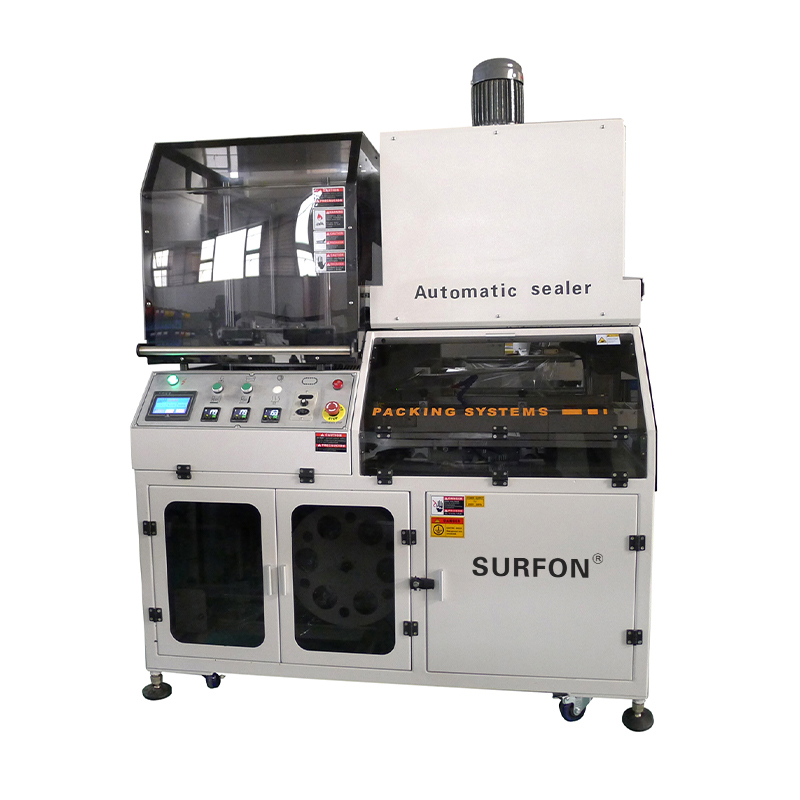
For small workshops making the switch, the practical entry point is a semi-automatic L-bar sealer paired with a compact shrink tunnel. You seal and cut in one motion, then pass the package through the tunnel, and the film does in seconds what a heat gun can only approximate.
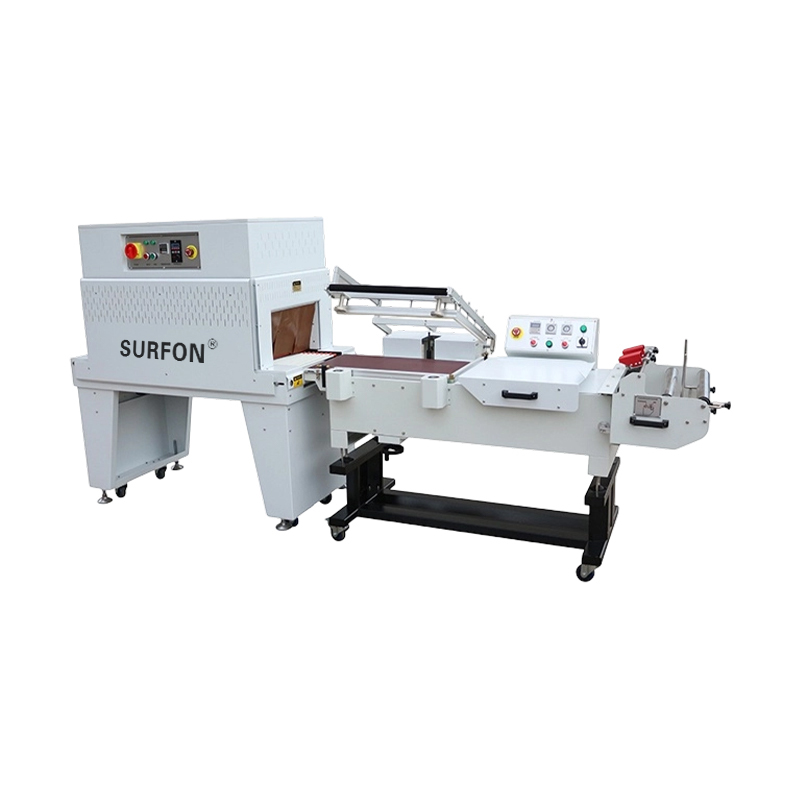 Semi-Automatic L-Bar Sealer and Shrink TunnelAn integrated L-bar sealing and cutting unit with a compact shrink tunnel for small workshops moving up from manual wrapping.View Product →
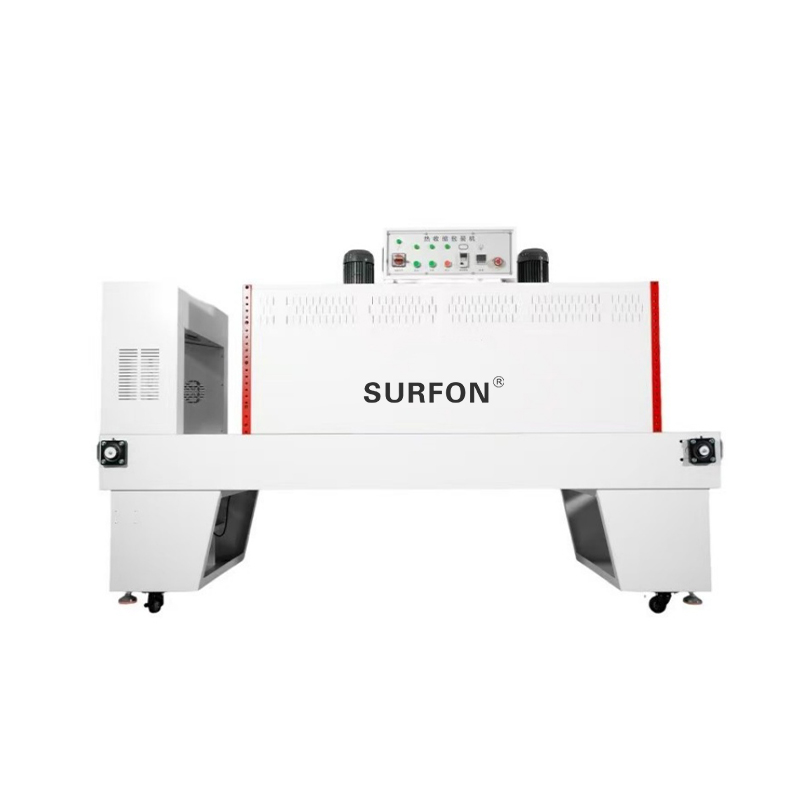
As volumes grow, a POF film machine with a stable tunnel temperature becomes the workhorse. POF runs cooler and cleaner than PVC, gives a strong, transparent finish, and tolerates the kind of stop-start rhythm that small production runs tend to have.
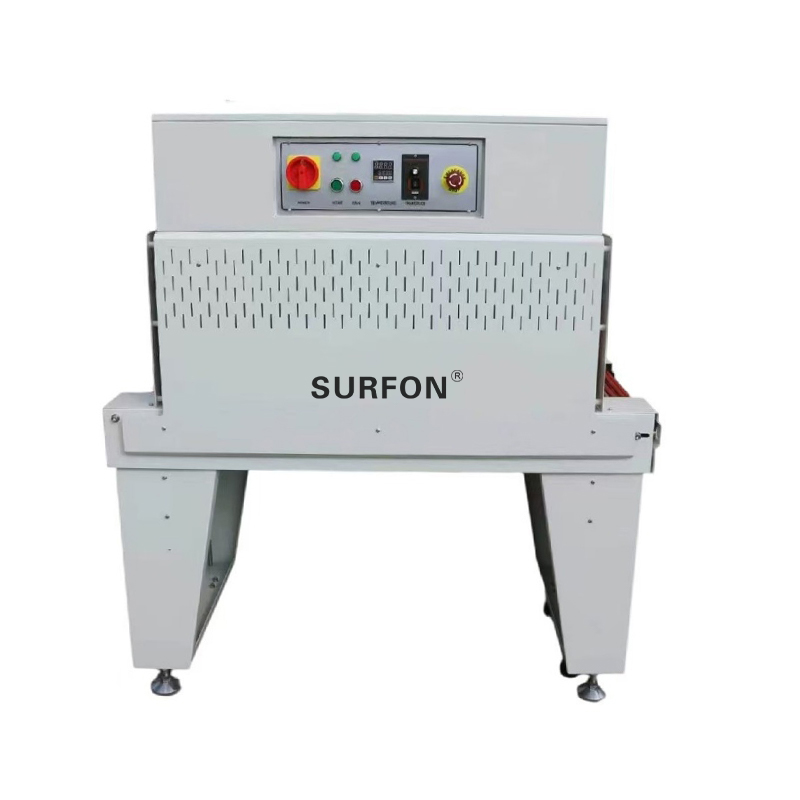 SF-4525 Medium-Sized Heat Shrink TunnelA medium-sized tunnel for regular goods under 450×250 mm, compatible with PVC, POF, and PET films and suited to growing production runs.View Product →
Scaling From Hand Wrapping to Production
The jump usually happens quietly. One week you are misting twenty hampers by hand, the next you have quotes out for three hundred. At that point the question stops being "how do I shrink cellophane" and becomes "which machine matches my product and my film".
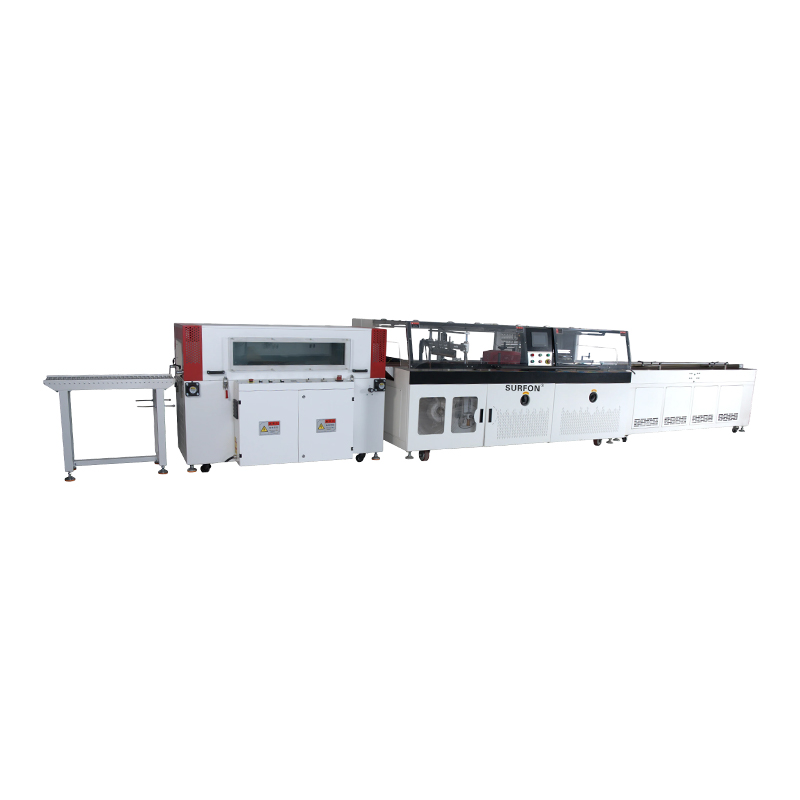
Three variables decide it: product size and shape, the film you intend to run, and how many packs per minute you actually need. A wide tunnel with a longer cavity suits taller or wider items; a side-sealer handles long profiles that an L-bar cannot close cleanly; a sleeve wrapper is the better answer for round or multi-pack bundles. Bottles and jars in personal care and household lines, for instance, are usually sleeved rather than fully enclosed — our personal care and home care application notes walk through that pattern in more detail.
For mid-volume operations that want a premium finish with headroom to grow, a wider, higher-specification POF tunnel is often the most comfortable fit.
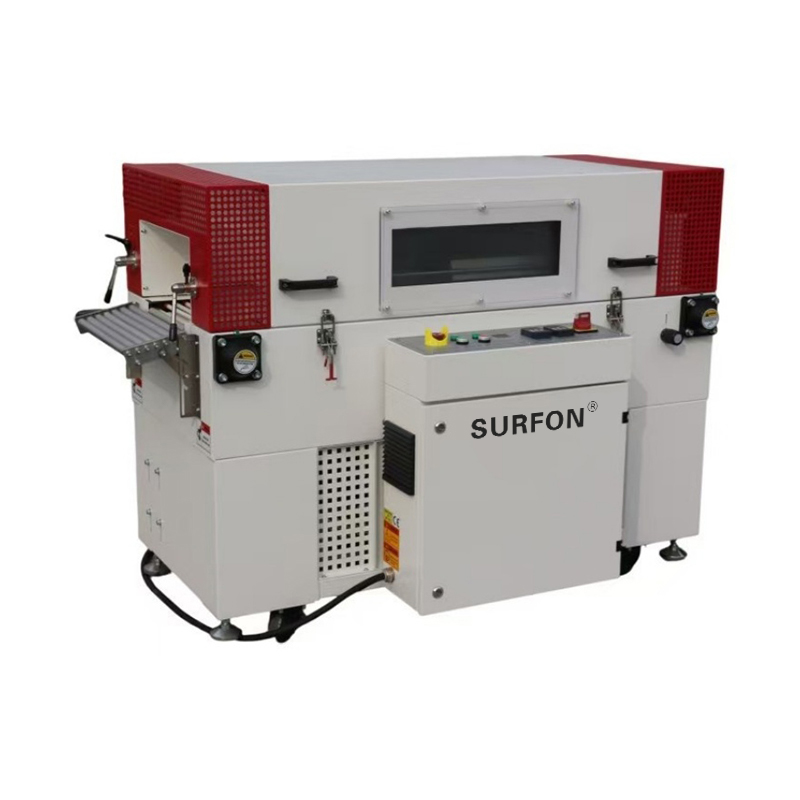 SF-5030LG Premium Heat Shrink Packaging TunnelA wider premium tunnel for mid-volume automated lines, designed for POF film and regular goods up to 500 mm wide and 300 mm high.View Product →
Safety and Storage Notes
- Work in a ventilated area. Heated coated film releases fumes you do not want to breathe in a closed room.
- Never leave a heat gun or dryer running unattended over cellophane.
- Keep the film roll away from direct sunlight and radiators. Cellulose picks up moisture from the air, and a damp roll wraps badly before you have even started.
- Store partly used rolls sealed in their original bag so the coating stays stable.
- Test any new heat setting on an offcut first. Two seconds of testing saves a whole rewrap.
Cellophane rewards a light touch. Mist it, tension it, dry it slowly, and it will give you the crisp, transparent finish that made it a favourite in the first place. Reach for high heat, and it will let you know immediately. Learn that rhythm and hand wrapping stays quick and predictable — and when your volumes outgrow the spray bottle, the move to a proper shrink system is a straightforward one rather than a leap into the unknown.
-
 how many pallets will a roll of shrink wrap: Practical Applications, Selection
-
How to Shrink Plastic in an Oven: A Friendly, Practical Guide for Makers
-
How Long Does Shrink Wrap Last? Film Shelf Life, Storage, and Use Cases
-
Multi-Dimensional Detailed Introduction to Heat Shrink Film Packaging Machines


Copyright @ Shanghai KUKO Packing Machinery Co., Ltd. All rights reserved
